
Types of Grain Storage: Understanding the Different Grain Bin Systems
Feb 18th 2026
Grain storage solutions have changed a lot in the last century. Many operations still count on traditional storage structures like concrete silos, while others have embraced advanced grain storage solutions built around metal bins, automation, and tighter control of temperature and grain moisture control. Either way, the end goal stays the same: protect stored grain so it stays market-ready, safe, and valuable.
In the United States, the “right” storage system depends on what you grow, how long you plan on storing grains, how your grain handling systems move product in and out, and what your climate does from harvest through winter and spring. This guide breaks down the types of grain storage used most often today, why they vary, and how concrete, metal, and hybrid systems work in real operations.
Why Do Grain Storage Systems Vary?
There’s different types of grain storage because grain isn’t just one thing, and operations aren’t just one size. Grain storage systems vary based on:
- Materials of construction: concrete, steel, and mixed systems behave differently as temperature swings, humidity changes, and equipment loads build over time.
- Capacity requirements: small farms, mid-size operations, and high-volume commercial sites have very different bulk grain storage needs.
- Climate conditions: a storage system in a humid southern climate faces different risks than a system in the Upper Midwest where freeze-thaw cycles, winter cooling, and spring warming drive management decisions.
- Operational workflows: the best storage structure for fast receiving and fast shipping might be different from what works best for long-term storage and market timing.
Choosing the right storage system is crucial because grain storage methods influence shrink, spoilage risk, safety workload, and how efficiently your grain handling systems can load, unload, core, and move grain. Temperature and moisture drive storage life, with aeration serving as a tool for stabilizing conditions in bins.
At a high level, most types of grain storage fall into three categories:
- Concrete grain storage systems
- Metal grain storage bins
- Hybrid grain storage systems
Throughout the sections to follow, you’ll see how these grain storage structures work in practice, why they evolved, and what tradeoffs show up in day-to-day grain storage facility management.
Traditional Concrete Grain Storage Systems
Concrete grain storage systems are among the earliest “modern” grain storage structures used at scale. When people talk about “concrete silos,” they might mean tall cylindrical towers, large rectangular storage blocks, or other heavy permanent grain storage designs that were built to stand for decades.
Concrete silos and related storage structures are most commonly associated with:
- Large-scale or legacy grain operations that invested in long-life infrastructure
- Sites with established handling equipment already designed around concrete systems
- Regions with moderate climates and freeze-thaw cycles, where concrete has a track record for durability
Capacity is a defining feature; concrete storage structures can hold very large volumes — sometimes tens of thousands of bushels or more in a single structure, depending on design. That makes them a recognizable part of many older grain storage facilities.
In new installations, though, concrete systems are less common than metal bins because many operators are looking for faster build times, easier expansion, and more modular storage system options.
Benefits and Limitations of Concrete Grain Storage
While concrete can be a strong fit, it tends to work best in specific scenarios rather than universally.
Benefits of concrete grain storage
- High structural durability: concrete storage structures can handle long service lives with less concern about panel corrosion.
- Long service life: for sites planning decades of use, concrete can be a practical long term storage asset.
- Cost-effective in certain labor markets: in some regions, the economics of materials and labor can make concrete competitive for high-capacity builds.
Limitations to consider
- Longer construction timelines: concrete builds usually take more time than bolting up metal bins.
- Less flexibility: changing capacity, adding bins, or modifying workflows can become harder after a concrete storage structure is in place.
- Climate and grain challenges: moisture management in grain storage still matters just as much, and some system designs can make inspection, cleaning, and airflow changes more difficult.
Concrete doesn’t eliminate the need to follow grain storage best practices. Grain moisture control, careful temperature management, and a plan for grain storage pests are all still essential, especially in warm shoulder seasons when insect activity climbs.
Modern Metal Grain Storage Bin Options
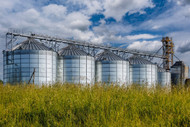
Metal grain storage bins are the most widely used system in modern agriculture, central to most on-farm grain storage builds. Most are made from galvanized steel, assembled as modular storage structures, and tied into grain handling systems that support receiving, conveying, drying, aeration, and loadout.
Metal bins are used for both short-term and long-term storage across the United States, common in moderate climates and much of the southern U.S. for large on-farm setups.
When people compare different types of grain storage, metal bins usually above the rest because they offer flexible sizing, more predictable build schedules, and easier expansion. In practice, operators choose among several standard metal bin configurations:
- Flat bottom bins for high-capacity storage and efficient bulk grain storage.
- Hopper bottom bins for faster unload and cleaner flow, often helpful for shorter storage cycles or frequent turnover.
- Integrated bin tank systems and related packages that support larger sites with multiple storage points and coordinated handling.
Across these options, the core advantage stays consistent: metal bins are adaptable grain storage solutions that can be scaled as acreage, yields, or marketing plans change.
Strengths and Tradeoffs of Metal Grain Storage Bins
Key strengths
- Faster installation: compared to concrete storage, metal bins can be built and commissioned faster, which matters when harvest windows are tight.
- Flexibility and scalability: adding bins or expanding a storage system is often more straightforward than altering a permanent concrete structure.
- Broad grain compatibility: metal bins are used across many grain types and storage durations.
- Multiple configurations: flat bottom, hopper bottom, and other standard options make it easier to match the storage structure to workflow.
Tradeoffs operators should account for
- Ongoing maintenance: bolts, roof vents, seals, fan systems, and unloading equipment all require routine checks as part of grain storage facility management.
- Durability depends on upkeep: corrosion control, proper sealing, and safe aeration practices influence long-term performance.
- Moisture and temperature still drive risk: bins do not “solve” storage automatically, but they make management more feasible if you follow best practices.
This is also where pest prevention in grain storage becomes a routine operational discipline, not an occasional reaction. Stored grain creates a stable food source for insects and rodents, so pests become a predictable risk in most facilities.
Below are real operational focus areas many facilities use to keep stored grain in condition:
- Keep grain cool and uniform: aeration is often used to reduce temperature differences in the grain mass, helping prevent moisture migration and condensation.
- Inspect on a schedule: observation programs catch hotspots, crusting, and early signs of grain storage pests before damage spreads.
- Sanitation and exclusion: clean handling equipment and bin areas minimize the chance that grain storage pests establish populations before filling.
How Hybrid Grain Storage Systems Fit into the Industry
A hybrid grain storage system combines different structures to strike the best balance between capacity, cost, and workflow. The most common hybrid approach is:
- Central concrete silos or a major concrete storage block
- Surrounding metal grain storage bins that add flexible capacity and help distribute intake and loadout
Hybrid systems are often used in high-volume grain regions where throughput is high, and where bulk storage needs to change with crop mix, acreage expansion, or contract demand. They can also make sense when a site already has legacy concrete silos but wants the expansion speed and modularity of metal bins.
They’re highly site-specific and less common overall than pure metal builds, but they can be efficient when the goal is to combine long-lived infrastructure with flexible add-on capacity. Hybrid storage can also be a platform for automated monitoring, which is one of the most visible innovative grain storage methods in the market today. Many operators add sensors and software that track temperature trends, fan run time, and alerts that point to moisture management in grain storage issues early.
Choosing the Right Type of Grain Storage for Your Farm
When operators weigh the different types of grain storage, the best decisions come from planning around the way grain moves, the time grain must sit, and the risks that show up in your region.
Ask these questions to drive the best-fit storage system:
How much capacity do you need now, and what happens if yields climb?
Capacity planning is a core component of on-farm grain storage strategy. If you expand acreage or push yields higher, your storage system needs to keep up — or your operation can lose time waiting on trucks, elevators, or dryers. Modular metal bins often make capacity changes simpler, while concrete may be better suited to long-term fixed capacity.
Are you storing short-term, long-term, or both?
Storage duration drives grain moisture control targets, aeration strategy, and how aggressively you manage grain storage pests. Storage issues can arise from weak management practices, whereas aeration, insect control, and regular inspection can all protect grain value.
How does climate affect your selection?
Climate drives condensation risk, fan schedules, and insect pressure. In many northern states, operators use fall and winter air to cool grain, then monitor carefully as spring temperatures rise.
What does your workflow require?
Your operational workflow is crucial to consider. If you need rapid unloading, hopper-bottom designs may fit better. But if you need efficient bulk grain storage with strong handling integration, flat bottom bins may be best.
A straightforward compliance and safety reality
Most grain storage facilities operate under safety expectations tied to worker protection, confined space hazards, engulfment risk, equipment guarding, and grain dust control. These requirements all shape grain storage facility management practices, training, and inspection routines.
For compliance, the most useful approach is practical: document inspection schedules, keep equipment maintained, train workers on bin-entry hazards, and stay current with any applicable local, state, and federal requirements for your operation type.
The economic angle that actually drives decisions
Grain storage economics often comes down to timing and loss prevention. The value of reducing spoilage, avoiding quality discounts, and improving market timing can outweigh upfront costs, especially when storage supports a consistent marketing plan. Extension resources repeatedly connect good storage outcomes to managing moisture, temperature, and pests because those factors determine whether grain keeps its grade.
Understanding Your Grain Storage Options
Now, you’re equipped with a clearer view of the major types of grain storage used across the industry:
- Concrete grain storage systems: durable, long-life storage structures that often suit legacy or large fixed sites
- Metal grain storage bins: flexible, widely used grain storage solutions that scale well and integrate with modern grain handling systems
- Hybrid grain storage systems: site-specific combinations that pair permanent infrastructure with modular capacity
It’s important to understand each storage type, as the system you choose directly impacts grain quality preservation, the workload of grain storage facility management, and how reliably you can protect stored grain from moisture problems and grain storage pests.
When you align your capacity needs, climate realities, and workflow requirements, you put your operation in a strong position to store grain successfully. For help matching bin types to your goals, feel free to contact us for guidance.